


Supply Chain Sustainability
1. Management System
1-1. Board of Directors' Roles and Responsibilities in Supply Chain Management
Pulmuone holds the ESG Committee meeting under the Board of Directors twice a year to review 1) the Company's strategy, 2) mid- to long-term goals, and 3) other matters deemed necessary by the board and committees in supply chain management. The committee identifies and evaluates various topics and issues related to ESG operation, including supply chain management of the Company. This is done to keep track of our management strategies and directions, as well as to conduct a constant review on the relevant progress and issues.
The roles, responsibilities, and other matters of the committee under the board are set forth in Articles 2 and 10 of the ESG Committee Operating Rules. In 2024, the committee completed a report on supply chain ESG assessment performance and plans*.
* As of 2024, our key achievement includes the establishment of the Food Industry ESG Code of Conduct and the development of the associated audit index and guidelines. For 2025, our plan is to further refine the index based on company size, strengthen ESG diagnostic methodology training for practitioners, and expand both the number of companies assessed and third-party verifications.
1-2. Supplier ESG Management Process
We established a process for managing ESG practices and reducing risks in our supply chain by checking the pool of significant suppliers and conducting ESG assessments on a regular basis.
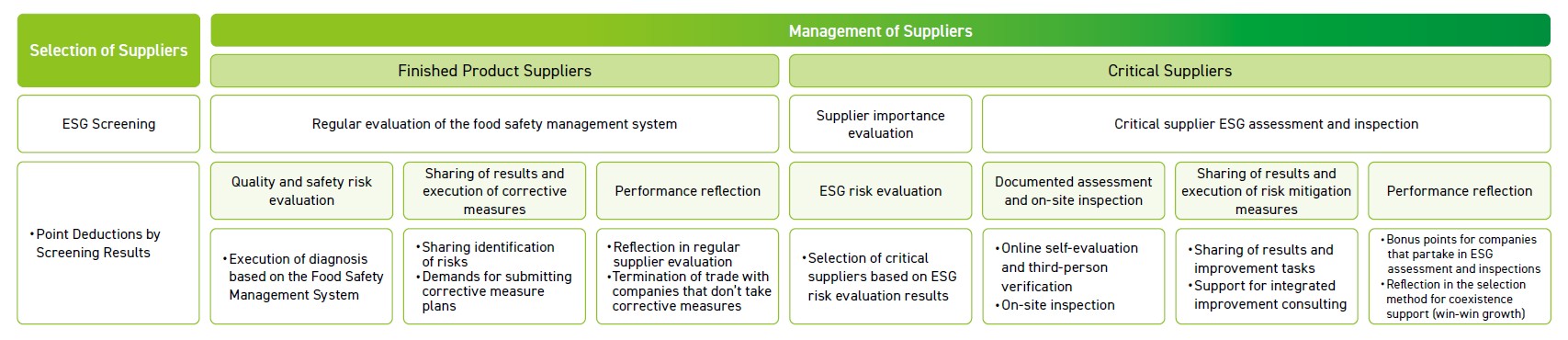
[Supply Chain ESG Management Process]
1-3. Food Industry Supply Chain ESG Alliance
To promote ESG capabilities across the food industry, Pulmuone actively seeks collaboration with companies that share its supply chain. Integrated ESG management initiatives, such as joint assessments, audits, and training, help reduce costs and alleviate the burden on suppliers.
In 2023, Pulmuone helped establish the Supply Chain ESG Alliance, composed of key members of the food industry. This led to the launch of the Food Industry Supply Network ESG Joint Business Committee, in partnership with five major domestic food companies.
In 2024, Pulmuone selected service providers to support the industry-wide implementation of a standardized Supplier Code of Conduct, build operational systems, and develop a shared ESG information platform. Based on this platform, a pilot ESG supplier assessment project was carried out, and ESG training programs—both basic and advanced—were provided for supplier executives and frontline staff to enhance ESG competencies, particularly among small and medium-sized enterprises.
In 2025, ten food companies are expected to join the joint project. Pulmuone plans to host an ESG Alliance Declaration Ceremony and ESG Management Forum to expand collaboration and synergy within the industry. Moreover, certificates of ESG diagnosis will be issued to participating suppliers, and outstanding participants will be recognized through an award ceremony to further promote engagement.
2. Policies & Regulations
2-1. Pulmuone Purchase Policy
Pulmuone and all its affiliates comply with the company-wide Purchase Policy, which applies to all goods and services directly or indirectly procured. The policy includes a Code of Conduct (Chapter 5) prohibiting unfair trade practices and improper exchanges of monetary value, while encouraging responsible purchasing practices, including the protection of personal information.
Chapters 8 and 9 of the policy define a comprehensive ESG risk management system, which incorporates factors such as legal compliance, human rights, ethics, and environmental responsibility throughout the supplier engagement cycle-from identification and contracting to performance evaluation. It also outlines support mechanisms for suppliers, such as training and capacity-building initiatives.
2-2. Supplier Code of Conduct
Pulmuone enforces its Supplier Code of Conduct to ensure that its suppliers uphold corporate social responsibility. The company only engages in business with partners who agree to the Code. The Code outlines core expectations, including the provision of a safe and healthy working environment, respect for employee human rights, efforts to minimize environmental impact, and adherence to ethical business practices. Through the food industry ESG alliance, Pulmuone continues to review and update the Supplier Code of Conduct, while conducting regular assessments and audits to monitor compliance.
3. Supplier Screening & Identifying Significant Suppliers
3-1. ESG Screening in the Supplier Selection Stage
Pulmuone conducts ESG screening as part of the supplier selection process for all new suppliers. This screening is
mandatory and carries a weight of 15% in the evaluation, applying to all new suppliers across three categories: Original Equipment Manufacturing (OEM), packaging, and ingredients.
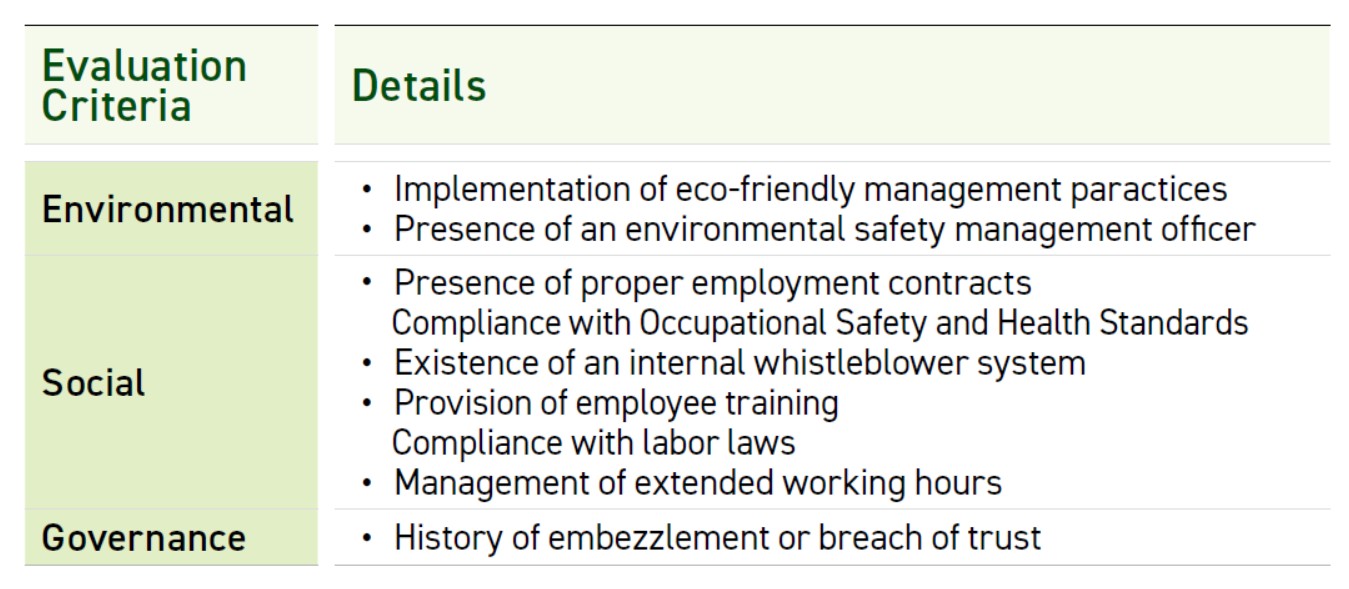
[Supplier Selection Screening Criteria]
※ These screenings and evaluations are divided into the areas of original equipment manufacturers (OEMs), packaging materials, and raw materials, with different evaluation factors depending on the purchase items and business characteristics.
3-2. Supplier importance evaluation
In alignment with Pulmuone’s mutual growth policy, the company convenes a Mutural Growth Council following the annual supplier evaluation. The council consists of field-level personnel from relevant departments and is tasked with identifying and classifying suppliers as critical, important, or ESG high-risk. This classification is based on the degree of business interdependence, ESG risk relevance, and supplier replaceability.
Significant suppliers are those that provide essential goods or services to Pulmuone or maintain a significant volume or duration of transactions. Critical suppliers are a subset of significant suppliers whose ESG risk exposure necessitates closer monitoring. ESG high-risk suppliers are those that either currently compromise supply chain sustainability or are likely to pose such risks in the future.
Pulmuone continues to listen to suppliers’ concerns through the council and works collaboratively to support mutual growth, strengthen ESG management practices across the supply chain, and proactively identify and manage key risk factors.
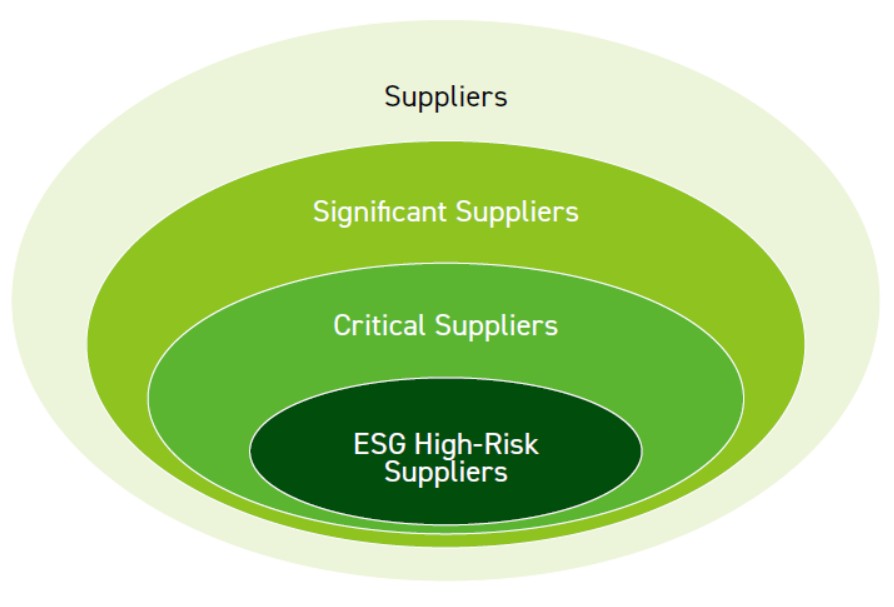
[Organizational Structure of Pulmone Suppliers]
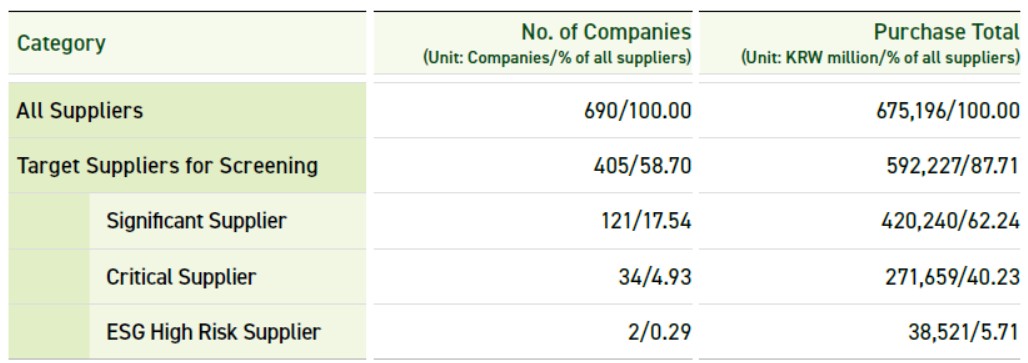
[2024 Suppler Screening Results]
※ Tier-1 suppliers only, since there are no significant suppliers below Tier-1.
4. Supply Chain ESG Assessment Process
Pulmuone conducts ESG assessments for critical suppliers to evaluate the level of ESG management across the supply chain and to proactively identify and manage potential risks. The evaluation framework was independently developed to reflect the specific characteristics of the food industry, with reference to international supply chain evaluation standards such as the Responsible Business Alliance (RBA) and Ecovadis. Targeted suppliers are supported with field-level training and detailed guidance throughout the ESG evaluation process to enhance
effectiveness. They are required to respond to category-specific questions via an online selfassessment platform and submit supporting documentation. Identified risks from the selfassessment are then verified through third-party on-site inspections.
Bonus points are awarded to suppliers that participate in ESG assessments and inspections, and these are reflected in the annual supplier evaluation, including decisions on contract renewal. Such participation is also considered in the selection process for Pulmuone’s munutal growth program, which provides preferential treatment to suppliers demonstrating strong ESG performance.
As a result of the 2024 ESG diagnosis, key areas requiring focused improvement were identified in water resource management, procurement of raw and sub-ingredients, internal audit systems, and ethical management. The evaluation findings and corresponding improvement tasks were communicated individually to each supplier. Notably, one supplier received dedicated consulting support to assist with integrated improvements following the inspection.
Separately, we conduct an annual audit of those that supply finished products based on the requirements set in the Pulmuone Food Safety Management System. The metrics include violations of ESG-related laws and regulations, and social issues, and the following results are reflected in the regular evaluation process on our suppliers. Any risks identified during the process are shared with the relevant suppliers so that they can enact needed improvements. Then, each supplier submits their corrective action plans to our sourcing portal so we can verify that such plans have been processed properly and are completed. After the diagnosis, a remediation period is granted for suppliers that have failed to meet the requirements. If they failed to pass the first and second re-evaluation within a set period of time, they will be subject to the suspension process.
5. Supply Chain ESG Capacity Building
5-1. Establishment of the Digital Cluster Smart Factory
Since 2021, Pulmuone has been building a system for sharing and integrating manufacturing, production, and quality data based on the Internet of Things (IoT) and big data at a few business sites of our suppliers. In 2023, we built a digital cluster smart factory for the first time in the Korean food industry. With the investment of KRW 350 million (including government-subsidized KRW 94 million), we connected the factories of 3 suppliers (producers of nori, egg, and tteokbokki) with 8 of our own factories through the adaptation of MES (Manufacturing Execution System), enabling the streamlined management of production data as well as inventory data related to inventory and quality that are directly connected to food safety. Following the establishment of these digital systems, our suppliers have obtained the Smart HACCP certification by upgrading their food safety management processes.
5-2. Support for ESG Training and Audit/Consultation
To support ESG capability-building within the supply chain, Pulmuone conducted ESG diagnoses for nine suppliers identified as critical through its 2024 supplier screening process. After the assessment, detailed evaluation results and key areas for improvement were individually communicated to each supplier across categories such as human rights and the environment. One of these suppliers received intensive support, including a dedicated on-site visit for comprehensive ESG management consulting.
In addition, Pulmuone provided ESG training to supplier CEOs and field staff twice during the year through a joint ESG initiative within the food industry supply chain. As part of the initiative, a strategic ESG management forum was held to share Pulmuone’s ESG best practices and experiences, particularly in the area of human rights management. Pulmuone aims to expand ESG diagnosis and consulting coverage to up to 60% of its critical suppliers, with plans to continue growing this initiative.
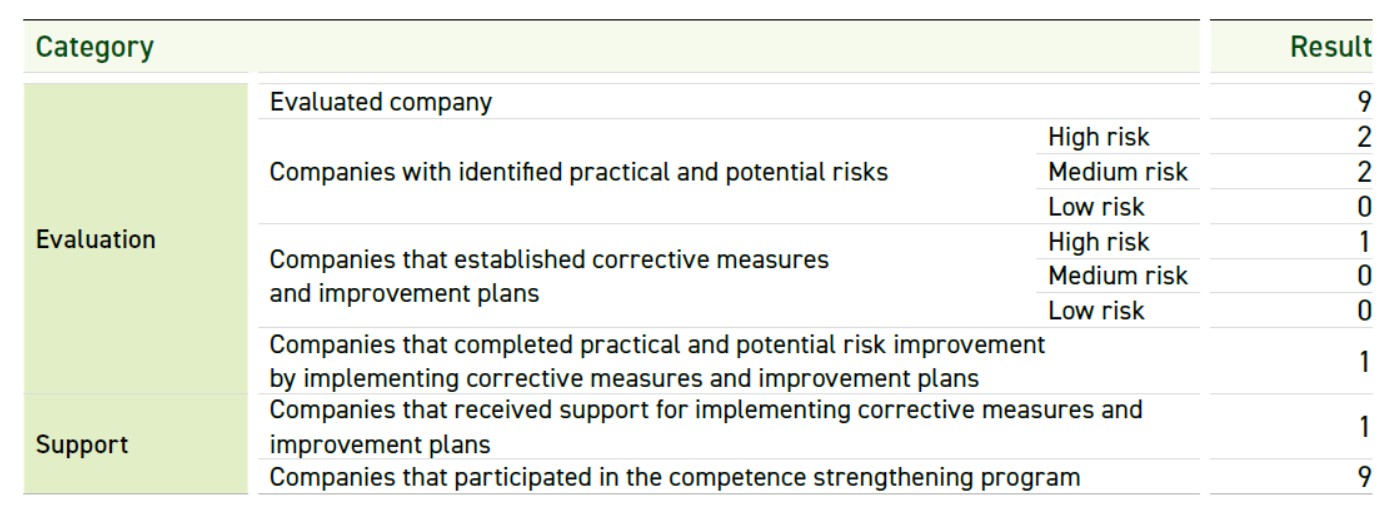
[2024 Critical Supplier ESG Assessment & Inspection Results]
※ Tier-1 suppliers only, since there are no significant suppliers below Tier-1.
-
- 다음글
- 다음글이 없습니다.