


Biodiversity Impact and Dependency Mitigation Measures
Biodiversity Impact and Dependency Mitigation Measures
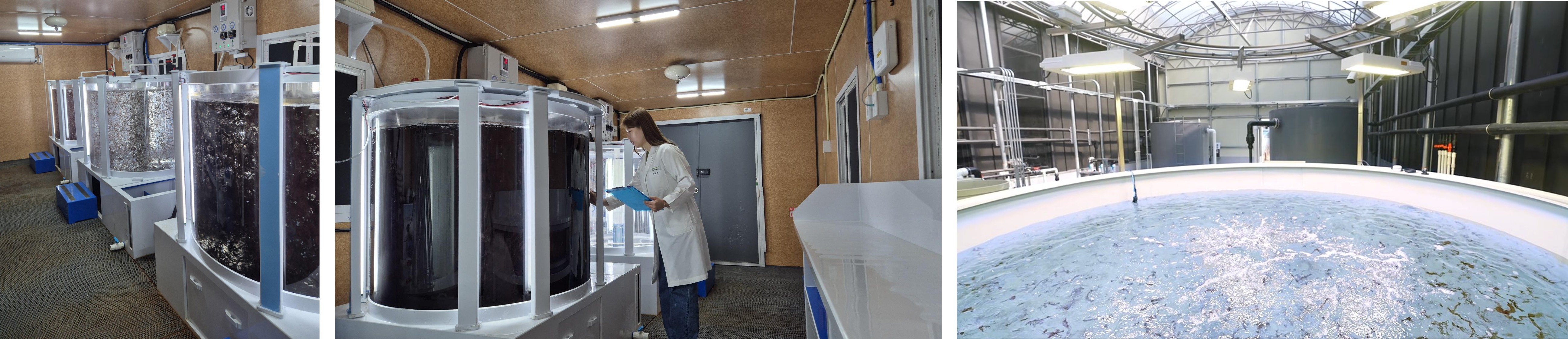
Development of Land-Based Seaweed (Laver) Aquaculture Technology
Laver is a commodity for which stable production is difficult to secure, owing to marine environmental risks such as climate change and red tides. Pulmuone is developing land-based aquaculture technology that produces laver by artificially creating a marine-like environment within onshore facilities rather than at sea. In 2025, the company was selected as the final operator of a national R&D project of the Ministry of Oceans and Fisheries, and plans to establish a demonstration center in Saemangeum. This constitutes spatial avoidance, in that raw material sourcing is no longer carried out in specific marine areas, as well as technological avoidance, in that the same objective is achieved through an alternative technology with lower impact on nature. It is a measure that fundamentally reduces dependency on highly variable marine ecosystem services.
Animal Welfare Eggs
Chemical inputs such as antibiotics, growth promoters and hormones can be released into ecosystems through livestock wastewater and other pathways, directly affecting biodiversity. Pulmuone produces animal welfare eggs in adherence to a principle of not using antibiotics, growth promoters or other hormones. This constitutes technological avoidance, in that an alternative method excluding chemical inputs with potential ecosystem impacts has been adopted.